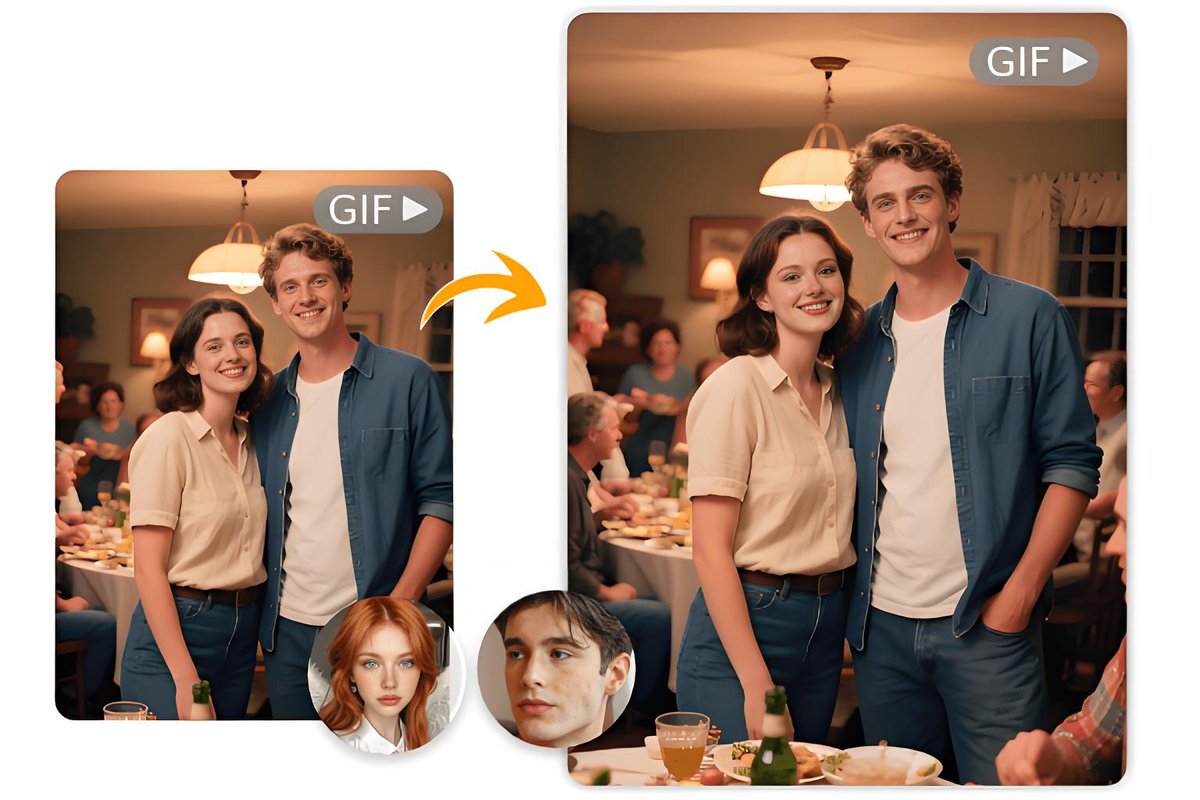
Ever tried to nail that perfect reaction GIF, only to have the character's face look… well, wrong? You’re not alone. The art of Optimizing AI Character Swap GIFs for Quality and Realism isn't just about clicking a button; it's about understanding the subtle science behind truly seamless transformations. As AI tools become incredibly sophisticated, the barrier to creating viral-worthy content has dropped significantly, but achieving that polished, professional look still requires a keen eye and a few insider tricks.
Think of it like being a director for a mini-movie: you're casting the perfect face, ensuring the lighting is right, and that every "actor" performs flawlessly across every frame. With AI, you’re not animating manually, but you are guiding the digital magic to preserve those crucial elements – original expressions, gestures, motion, and lighting – so your final GIF feels less like a swap and more like a natural part of the original scene.
At a Glance: Your Quick Guide to Flawless AI Character Swaps
- Source Material is King: Start with high-quality, well-lit GIFs and clear, front-facing character images.
- Match the Mood: Aim to match expressions, lighting, and angles between your source GIF and your character image for ultimate realism.
- Mind the Details: Pay close attention to subtle shifts in shadow, focus, and motion blur that can betray a swap.
- Leverage AI's Strengths: Modern AI tools excel at preserving motion and expressions, so give them good data to work with.
- Review, Refine, Repeat: Don't settle for the first output. Experiment with different character images or even minor post-processing for perfection.
- Privacy Matters: Choose tools that prioritize user data encryption and automatic deletion after use.
The AI Revolution in Motion: Crafting Visual Narratives
The landscape of digital content creation has been fundamentally reshaped by artificial intelligence, particularly in the realm of visual media. At its core, an AI GIF character swap generator offers a deceptively simple premise: take a GIF, take a face, and seamlessly fuse the two. But the magic lies in the AI’s ability to go beyond a mere overlay. It meticulously analyzes facial landmarks, expressions, head poses, and even subtle lighting cues across every single frame of a GIF. This isn't just a static paste; it’s a dynamic, frame-by-frame reconstruction that aims to make your chosen character genuinely inhabit the GIF.
The payoff? Instant, hyper-realistic character swaps that maintain the original motion, expressions, and environmental lighting of the source GIF. This capability has opened up a whole new world for personalized memes, viral reaction GIFs, compelling marketing content, and creative projects across platforms like TikTok, Instagram, YouTube Shorts, and Discord. The best part? Many robust online tools are now completely free, offering unlimited, high-quality, watermark-free output without requiring sign-ups or imposing restrictive usage limits.
The Anatomy of a Great AI Swap: What Realism Really Means
Before we dive into the "how-to," let's define what makes an AI character swap truly great. It boils down to seamless integration and the complete absence of that uncanny valley feeling.
- Expression Preservation: The swapped face shouldn't be a frozen mask. It needs to reflect the original character's emotions and mouth movements throughout the GIF.
- Lighting Consistency: This is often the biggest giveaway. The swapped face must match the direction, intensity, and color temperature of the light source in the GIF. A face lit from the left dropped into a GIF where the light comes from the right will immediately look fake.
- Motion and Head Pose: The AI should seamlessly track head movements, tilts, and turns, ensuring the new face follows the original character's motion path without jarring shifts or wobbles.
- Skin Tone and Texture Blending: While harder for the AI to perfect, good tools will attempt to blend the new face’s skin tone and even subtle texture into the surrounding environment, minimizing harsh lines or obvious cutouts.
- Resolution and Clarity: A sharp, high-definition face swapped onto a low-res GIF will look out of place, and vice-versa. Consistency here is key.
When these elements align, the result is a smooth, professional animation that looks like it was always meant to be.
Your AI Character Swap Toolkit: A Step-by-Step Guide to Excellence
Achieving top-tier results isn't about finding a secret button; it's about understanding the inputs and refining your approach. Here’s how to set yourself up for success.
Step 1: Harnessing the Right Tool for the Job
The foundation of any great AI character swap is a powerful, user-friendly tool. The market is increasingly rich with options that offer robust features. When evaluating your choices, look for:
- High-Quality Output: This is non-negotiable. The tool should consistently produce sharp, clean, watermark-free GIFs.
- Ease of Use: A simple, intuitive interface (typically a three-step process: upload GIF, add face, preview/download) is ideal. It should be optimized for both mobile and PC access.
- Privacy Commitment: Crucially, look for platforms that explicitly state their privacy protocols. The best tools encrypt your uploads and automatically delete them immediately after your session or use, ensuring zero data retention. This is a critical factor, especially when dealing with personal images.
- No Sign-up/Usage Limits: Many top-tier services offer unlimited use without fees or the hassle of creating an account. This freedom allows for experimentation without friction.
Once you've identified a reliable platform, you're ready to dive into the source material.
Step 2: The Source GIF – Setting the Stage for Success
The quality of your final output is directly proportional to the quality of your inputs. Think of your source GIF as the canvas.
What to Look For:
- High Resolution and Clarity: Choose GIFs that are sharp, in focus, and have good overall image quality. Blurry or pixelated GIFs will yield blurry, pixelated swaps.
- Clear, Well-Lit Faces: The original face in the GIF should be clearly visible and evenly lit. Avoid GIFs where faces are obscured, heavily shadowed, or poorly lit. The AI needs good visual data to analyze the underlying structure and motion.
- Consistent Motion and Perspective: GIFs with stable camera work and consistent facial angles tend to produce better results. Rapid, jerky movements or extreme head turns can sometimes challenge the AI.
- File Size (Up to 50MB): Most online tools support GIFs up to 50MB. While this is a generous limit, be mindful of overly large files, which might imply excessive length or resolution that could slow down processing.
- Relevant Expressions (Optional but Powerful): While the AI strives to preserve original expressions, a GIF where the character already has a similar general expression to your target face can sometimes lead to more convincing results.
Pitfalls to Avoid:
- Low-Resolution or Heavily Compressed GIFs: These will result in a grainy, artifact-ridden swap.
- Faces Obscured by Hair, Hands, or Objects: The AI needs a clear view of the face to perform an accurate swap.
- Extreme Angles or Rapid Head Turns: While AI is getting better, these can still sometimes lead to slight "wobbling" or unnatural distortion.
- Inconsistent Lighting: If the GIF's lighting changes dramatically within a few frames, the swapped face might struggle to adapt, leading to flicker.
Step 3: The Character Image – Your AI’s Blueprint
This is where you introduce the "new actor" into your GIF. Your chosen character image is the AI's primary reference for the face it will map onto the GIF.
What to Look For:
- Crystal Clear and High Resolution: Just like the GIF, your character image should be sharp, in focus, and high-resolution. A fuzzy face image will lead to a fuzzy swapped face.
- Even, Natural Lighting: This is critical for realism. The character image should ideally be lit in a similar fashion to the target GIF. If the GIF is bright outdoor daylight, don't use a character image taken in dim indoor lighting.
- Front-Facing or Matching Angle: A front-facing headshot with a neutral or slightly smiling expression is often the safest bet. However, if the GIF character consistently looks to the side, a character image with a similar slight turn can sometimes yield superior results.
- Clean Background (Optional): While the AI primarily focuses on the face, a clean, uncluttered background in your character image can sometimes help the AI isolate the facial features more effectively.
- High Contrast and Good Exposure: Ensure the face isn't over or underexposed, allowing the AI to clearly distinguish features, shadows, and highlights.
Pitfalls to Avoid:
- Blown-Out Highlights or Deep Shadows: These can obscure crucial facial details that the AI needs to map accurately.
- Faces with Obstructions: Glasses (especially reflective ones), hats pulled low, or hands covering parts of the face can confuse the AI.
- Extreme or Distorted Expressions: While the AI attempts to match the GIF's expressions, feeding it a character image with a highly exaggerated expression (unless intentionally matching the GIF) can sometimes lead to unnatural results.
- Low-Resolution or Heavily Compressed Images: Again, quality in, quality out.
- Side Profiles for Front-Facing Swaps: Unless the GIF character is consistently in profile, a front-facing image is generally preferred.
Step 4: The Swap Itself – Letting the AI Do Its Magic
With your chosen GIF and character image uploaded (often supporting files up to 50MB for the GIF), the AI takes over. It automatically detects the face in your GIF and begins the complex process of mapping your uploaded character image onto it, frame by frame.
What to Watch For in the Preview:
Most good tools offer an instant preview. This is your moment to critically evaluate the AI’s work before downloading.
- Smoothness: Does the swapped face animate seamlessly, or are there jarring jumps or flashes?
- Expression Match: Does the new face convincingly mirror the original character's expressions? Pay attention to mouth movements, eye squints, and brow furrows.
- Realism: Does it look like the person genuinely belongs in the GIF, or does it scream "face swap"? Look for subtle tells like lighting mismatches or unnatural skin tones.
- Edge Blending: Are the edges of the swapped face smoothly blended into the surrounding GIF, or are there visible "cut-out" lines?
If the preview isn't perfect, don't be afraid to go back and adjust your character image. Sometimes a slightly different angle, expression, or lighting in your input photo can make all the difference. Once satisfied, you can download your AI-generated GIF face swap animation instantly.
Beyond the Basic Swap: Elevating Your GIF to Viral Status
While the AI handles the heavy lifting, your discerning eye and a few pro tips can push your GIFs from "good" to "wow."
Matching Emotion and Expression: The Subtle Art
The AI is designed to preserve original expressions, but the input face can influence the feel of the final output. If your source GIF shows a character laughing heartily, and you feed the AI a stoic, neutral face, the result might feel a little stiff.
- Pro Tip: For highly expressive GIFs, try to find a character image where the subject has a similar general emotion or mouth shape. A slight smile for a happy GIF, a neutral look for a thoughtful one. This gives the AI a better "baseline" to work from.
Lighting and Shadow Consistency: The Realism Killer
As mentioned, lighting is paramount. A mismatched light source is the quickest way to break the illusion.
- Pro Tip: If your GIF is brightly lit from the front, choose a character image that is also brightly and evenly lit from the front. If the GIF has strong shadows coming from the left, ideally, your character image should reflect a similar lighting scenario. If you don't have a perfectly matching character image, prioritize even, diffuse lighting over strong, directional lighting that clashes with the GIF.
Motion Blur and Frame Cohesion: Keeping It Seamless
High-action GIFs often contain motion blur to convey speed. A well-optimized AI swap should account for this.
- Pro Tip: Pay attention to how the AI handles motion blur around the swapped face. Does it retain the blur, or does the face appear unnaturally sharp in a blurry scene? If the tool struggles, consider choosing GIFs with less extreme motion or slightly lower frame rates where blur is less pronounced.
Aspect Ratios and Cropping: Preparing for Platforms
Different social media platforms have preferred aspect ratios and sometimes impose size limits.
- Pro Tip: While most AI tools focus on the swap, consider if the GIF itself needs cropping or resizing for its intended destination. A tall, narrow GIF might look great on Instagram Stories, but awkward in a Discord chat. Basic image editing tools can handle this post-download.
Post-Processing Polish (Optional but Powerful)
For those who want absolute perfection, minor tweaks after the AI swap can make a significant difference.
- Color Correction: Sometimes, the swapped face might have a slightly different color cast than the rest of the GIF. A minor tweak to saturation, vibrancy, or color balance in a photo editor can help it blend better.
- Subtle Sharpening/Softening: If the swapped face looks a touch too soft or too sharp compared to the GIF, very slight adjustments can harmonize it. Be sparing here – less is often more.
- Noise Reduction: If your source GIF or character image had some digital noise, running a subtle noise reduction filter might improve overall clarity.
Troubleshooting Common AI Swap Snafus
Even with the best practices, you might encounter issues. Here's how to diagnose and fix them.
"Why Does My Swap Look 'Off'?"
This is the most common complaint. The "off" feeling usually stems from one of these issues:
- Lighting Mismatch: The swapped face's lighting doesn't match the GIF's.
- Fix: Re-evaluate your character image. Can you find one with more appropriate lighting? Or choose a GIF that matches your available character image.
- Angle or Head Pose Discrepancy: The original GIF character's head angle is consistently different from your character image.
- Fix: Try a character image where the subject's head is angled similarly, or stick to front-facing images for front-facing GIF subjects.
- Low Input Quality: Blurry GIF or blurry character image.
- Fix: Find higher-resolution source materials.
Fixing "The Wobble" or "The Morph"
Sometimes the swapped face appears to subtly shift, wobble, or morph unnaturally across frames.
- Diagnosis: This often happens with GIFs that have complex head movements, rapid camera changes, or where the original face is partially obscured at times. The AI might struggle to consistently track the face.
- Fix:
- Simplify the GIF: Choose a GIF with more stable camera work and less extreme head movements.
- Ensure Clear Input: Double-check that both the GIF's original face and your character image are exceptionally clear and unobstructed.
- Experiment with Different Tools: Some AI algorithms handle complex motion better than others.
When to Try Again with Different Source Images
It's tempting to try and force a swap, but sometimes, the best solution is to change one of your inputs. If you've tried all the minor tweaks and the output still isn't satisfying:
- Swap Your Character Image: This is often the easiest fix. A different photo, perhaps with better lighting, a more neutral expression, or a slightly different angle, can dramatically improve results.
- Swap Your Source GIF: If your character image is precious, consider finding a GIF that better matches its characteristics (lighting, angle, simplicity of motion).
Remember, the AI is incredibly powerful, but it's still interpreting data. Better data leads to better interpretations.
Privacy & Ethical Considerations: A Quick Check-in
In a world increasingly concerned with digital privacy and the implications of AI, it's vital to choose tools that respect your data.
- Data Encryption: Reputable AI GIF swap tools use encryption for all uploads. This ensures that your images are secure during transfer and processing.
- Automatic Deletion: A strong privacy policy dictates that uploaded images and generated content are automatically deleted from servers immediately after your session or within a very short timeframe. This ensures zero data retention and protects your personal information.
- Responsible Use: While AI face swap GIFs are primarily for fun and creative expression, it's crucial to use them ethically. Always respect privacy and consent, and avoid creating misleading or harmful content. The technology is powerful; wield it responsibly.
Unleashing Your Creativity: Real-World Applications
The applications for high-quality AI character swap GIFs are incredibly diverse:
- Personalized Memes & Reaction GIFs: Infuse your chats with humor by swapping your friend's face onto a classic meme or your own face for a perfectly tailored reaction.
- Viral Social Media Content: Create eye-catching, shareable content for TikTok, Instagram, YouTube Shorts, or any platform where short, engaging visuals thrive.
- Marketing & Brand Promotion: Imagine swapping a mascot's face onto a popular GIF for a fun, relatable campaign, or putting a customer's face onto a product testimonial.
- Creative Projects: From short animated stories to unique digital art, the possibilities for character swaps are limited only by your imagination.
These tools make sophisticated content creation accessible to everyone, empowering individuals and brands alike to connect with audiences in novel, engaging ways.
Your Next Viral GIF Awaits: Final Thoughts on Mastering the Craft
The journey to Optimizing AI Character Swap GIFs for Quality and Realism is an enjoyable blend of technological understanding and creative intuition. You're not just a user; you're a curator, a director, and a discerning editor in the digital realm. By focusing on high-quality source materials, understanding the nuances of lighting and expression, and being willing to iterate, you'll consistently produce GIFs that captivate and delight.
Embrace the iterative process. Don't be afraid to experiment with different character images or even different source GIFs. Each attempt is a learning opportunity, honing your eye for what truly makes a character swap convincing. With robust, free, and privacy-conscious tools readily available, the power to craft genuinely impressive, realistic, and viral-ready AI character swap GIFs is literally at your fingertips. Go forth and create!