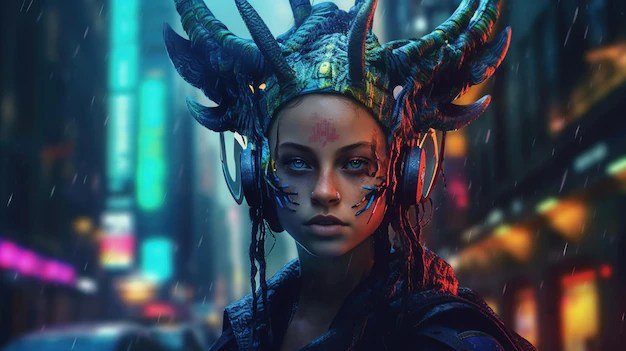
Character animation isn't just a niche skill anymore; it's the heartbeat of modern visual storytelling, evolving at breakneck speed. From the immersive worlds of video games and blockbuster films to the engaging narratives of educational content and virtual reality, the demand for innovative, faster, and more flexible animation is surging. At the forefront of this transformation are the groundbreaking future trends in AI-powered character animation, radically changing how we conceive, create, and experience animated worlds. This isn't just about making things move; it's about infusing characters with unprecedented realism, emotion, and interactivity, all while empowering artists to tell richer, more compelling stories.
At a Glance: What's Transforming Character Animation
- AI is the new assistant: Automating tedious tasks like in-between frames, lip-sync, and even rough blocking, freeing artists for creative refinement.
- Real-time is the standard: Instant previews and dynamic responses make animation more agile, especially for games and live experiences.
- Hybrid styles reign: The aesthetic fusion of 2D charm and 3D depth, popularized by Spider-Verse, is now more accessible than ever.
- Non-human characters get emotional: Advanced tech is making animals, robots, and fantastical creatures deeply expressive and relatable.
- Unique aesthetics valued: Beyond hyper-realism, stylized and alternative techniques are carving out distinct visual identities.
- Immersive characters are here: VR/AR demand characters that interact with users and blend seamlessly into real-world environments.
- Personalization is key: AI-driven avatars and customizable characters are tailoring experiences for individual users.
- Sustainability matters: Efficient tools and simplified designs are reducing energy footprints, influencing minimalist and efficient animation styles.
- New skills for animators: Strong fundamentals combined with AI tool adaptability and prompt engineering are essential.
The AI Revolution: Smart Tools for Smarter Animation
Imagine a world where the most repetitive, time-consuming parts of animation are handled by intelligent algorithms, allowing you to pour all your energy into the creative nuances that truly make a character shine. That's the promise of AI-powered character animation, and it's rapidly becoming reality.
AI tools are no longer futuristic concepts; they're in production pipelines right now, acting as powerful co-pilots for animators. They can effortlessly generate "in-between" frames—the subtle motions that connect key poses—saving countless hours. Need to replicate a unique drawing style across an entire scene? AI can learn and apply it. Even complex facial animation, from intricate lip sync to subtle emotional expressions, can be automated directly from audio input.
Take tools like Cascadeur, which leverages AI for physics-based character animation, ensuring movements are inherently natural and weighted. Or consider RADiCAL, which can convert everyday real-world video footage into professional-grade skeletal animations, making motion capture accessible without expensive suits or elaborate setups. This empowerment isn't just about speed; it's about enabling animators to achieve more nuanced, detailed, and emotionally resonant animation at a pace previously unimaginable. With an AI character swap GIF generator, for instance, creators can rapidly iterate on character designs and actions, experimenting with different visual outcomes in real-time. This iterative power accelerates concept development and allows for quick, playful exploration.
Real-Time & Procedural Animation: The Power of Instant Feedback
Gone are the days of long rendering queues and guessing games. Real-time animation, powered by game engines like Unreal Engine and Unity, means you can see your animation changes instantly. Tweak a pose, adjust a timing, or alter an expression, and it updates right before your eyes. This immediacy streamlines the creative process, encouraging experimentation and rapid iteration, which is invaluable whether you're working on a feature film pre-visualization or an indie game.
Beyond real-time previews, procedural animation systems are dynamically producing motion based on programmed rules or physics. Think about a character walking across uneven terrain: instead of painstakingly animating each footfall, a procedural system can automatically adjust leg movements, body tilt, and even clothing physics to react naturally to the environment. Blender's geometry nodes, for example, demonstrate this power, allowing artists to create complex, dynamic systems that respond intelligently to input. This not only saves time but also generates incredibly organic and lifelike responses for elements like flowing hair, rustling clothes, or a character's interaction with the physical world, making it a game-changer for solo developers and small indie studios who need big impact with limited resources.
Hybrid 2D/3D Characters: Blending Styles for Visual Impact
The animation world was collectively captivated by the groundbreaking aesthetic of Spider-Man: Into the Spider-Verse, which masterfully fused the expressive qualities of 2D animation with the depth and camera control of 3D. This "hybrid" approach is no longer a stylistic anomaly but a burgeoning trend, further popularized by series like Arcane.
This style combines the rich, illustrative lines and hand-drawn expressiveness of 2D with the fluid motion, dynamic camera work, and world-building capabilities of 3D. Software now makes this fusion more accessible than ever, allowing artists to shade 3D models to perfectly mimic 2D drawings or seamlessly integrate hand-drawn 2D assets into a volumetric 3D scene. This offers a powerful new artistic toolkit, enabling creators to achieve unique visual flair that stands out in a crowded media landscape, providing both nostalgic charm and cutting-edge sophistication.
Expressive Non-Human Characters: Beyond Human Limitations
For decades, human and humanoid characters have dominated animated storytelling. But as audiences increasingly connect with diverse narratives, the demand for complex, emotionally resonant non-human characters—animals, robots, abstract creatures, and fantastical beings—is growing. Thanks to advancements in rigging, facial tracking, and AI-assisted motion, these characters are becoming more lifelike and capable of conveying a deeper range of emotions than ever before.
Imagine a loyal robotic companion whose subtle light changes communicate deep concern, or an alien creature whose shifting bioluminescent patterns convey sadness. These technologies free animators from the constraints of human anatomy, opening up vast creative possibilities. Audiences now expect a deeper connection with all characters, regardless of their form, and animators are leveraging AI to imbue even the most abstract creations with relatable personality and emotional depth.
Stylized & Alternative Animation Techniques: Prioritizing Personality Over Purity
While photorealism continues to push boundaries, a significant shift is occurring towards unique, intentional styles that prioritize personality, strong timing, and exaggeration over hyper-fidelity. This trend encompasses everything from the tactile charm of stop-motion and the artistic freedom of collage to hand-drawn loops and even intentionally "rough" animation that embraces visible process and aesthetic imperfection.
These alternative methods, often seen in music videos, indie games, and vibrant social media content, prove that animation doesn't need expensive software or a massive rendering farm to be impactful. Instead, the focus is on a distinctive aesthetic, compelling storytelling, and a unique creative voice. It’s a powerful reminder that sometimes, breaking away from conventional polish can create a more memorable and authentic connection with the audience.
VR/AR Characters & Immersive Experiences: Animating for New Realities
The rise of virtual and augmented reality isn't just creating new platforms; it's demanding entirely new approaches to character animation.
- Virtual Reality (VR): In VR, characters exist within a fully immersive, 360-degree environment. This means users can move around, look from any angle, and even influence the characters directly. Animators must now consider movement and staging from every conceivable perspective, ensuring characters look convincing and respond dynamically to user position and actions. The sense of presence and interactivity is paramount, transforming passive viewing into an active experience.
- Augmented Reality (AR): AR characters blend seamlessly into the real world, appearing as if they're right there with you—a virtual pet scampering across your desk or a historical figure guiding you through a museum exhibit. This context demands meticulous spatial awareness, immediate responsiveness, and a high degree of visual realism, often for short, impactful bursts of motion. AR is powerful for marketing, mobile games, and educational tools, where characters act as engaging conduits between the digital and physical.
Hyper-Personalization & AI-Driven Avatars: You, Animated
In the rapidly expanding realms of gaming, social applications, and the burgeoning metaverse, characters are becoming deeply personal extensions of ourselves. Real-time animated avatars represent individual users, offering dynamic responsiveness to voice commands, facial tracking, and even AI predictions of intent.
AI plays a crucial role here, automating nuanced lip sync to match your spoken words and translating your facial expressions into your avatar's emotional shifts. This trend requires animators to design incredibly flexible rigs and modular character systems, enabling users to customize everything from clothing to hairstyles, creating truly unique and personalized digital identities. This isn't just about customization; it's about crafting an immersive self-expression that feels genuinely you.
Sustainable Character Animation: Crafting with Conscience
As the digital world expands, so does its environmental footprint. The animation industry is increasingly adopting sustainable practices, focusing on efficiency not just for cost but for ecological impact. This involves using more efficient tools and optimizing animation workflows to reduce rendering times and lower file sizes, which directly translates to decreased energy consumption.
The shift favors clean rigs, low-poly characters, and minimal textures, influencing a move towards more minimalist styles, especially visible in explainer videos, children's content, and mobile applications. Asset reuse and smarter resource management are becoming standard practice. This isn't just a technical consideration; it's a creative one, encouraging artists to find beauty and impact in simplicity, pushing for innovative aesthetics that are both visually compelling and environmentally responsible.
AI's Broader Impact: An Evolution of the Craft
The influence of AI extends far beyond individual character movements, touching nearly every facet of the animation pipeline. It marks a profound evolution in how stories are brought to life:
- From Hand-Drawn to AI-Assisted: Animation has journeyed from laborious traditional 2D frame-by-frame drawing to computer-assisted 2D, then full 3D masterpieces from studios like Pixar, and now to an era where AI and procedural methods automate tasks like in-betweens, lip-sync, rigging, and even preliminary storyboarding.
- 2D Animation Reinvented: For 2D artists, AI is a game-changer. It automates tedious in-betweening, enables smart lip-sync (e.g., Papagayo integrated with AI), facilitates style transfer to maintain visual consistency, and can even generate initial storyboards. This empowers smaller teams to produce high-quality, professional 2D animations at significantly reduced costs, democratizing the medium.
- 3D Animation Enhanced: In 3D, AI means sophisticated motion capture without expensive suits, creating realistic movement without manual keyframing. Deep learning algorithms are refining facial animation to capture subtle human emotion, and AI can even procedurally generate entire environments, allowing artists to focus on core character interaction.
- Real-Time Animation Unleashed: AI is the engine behind Virtual YouTubers (VTubers) that stream live, enabling dynamic NPC behaviors in game engines like Unreal, and even powers real-time dubbing and localization, making content instantly accessible globally.
- Storytelling & Scriptwriting Support: Believe it or not, AI is even stepping into the narrative realm. It can assist in generating story ideas, suggest plot structures, and provide data-driven insights into audience preferences—Netflix, for example, has experimented with using AI to inform content creation.
Ethical Considerations: Navigating the New Frontier
Of course, with such powerful technology come important discussions. Debates around originality, the potential for job reduction (especially for junior animators handling repetitive tasks), and the biases embedded in AI training data are critical.
The overwhelming consensus, however, is clear: AI should be viewed as a powerful creative assistant, not a replacement for human ingenuity. While AI can handle the mechanics, human creativity, empathy, and unique artistic vision remain irreplaceable. The goal isn't to remove the artist, but to elevate them, freeing them from the mundane to focus on the magic.
Essential Skills for the Animator of Tomorrow
The landscape is shifting, and so too must the toolkit of the modern animator. While foundational skills remain paramount, new competencies are rapidly gaining importance:
- Strong Fundamentals: Never underestimate the bedrock of animation: drawing, anatomy, principles of motion, and above all, compelling storytelling. These are the timeless skills that no AI can replicate.
- Software Mastery: Proficiency in industry-standard tools like Blender, Maya, Toon Boom Harmony, and After Effects is still crucial, providing the canvas for your creations.
- AI Tool Adaptability: Embrace new platforms like RunwayML, DeepMotion, and Adobe Firefly. Understanding how to integrate these AI assistants into your workflow will be a significant advantage.
- Creative Direction: With AI handling more of the 'how,' the 'what' and 'why' become even more critical. Strong creative direction, artistic vision, and the ability to conceptualize unique characters and worlds are invaluable.
- Cross-Disciplinary Skills: The lines are blurring. Skills in motion graphics, video editing, and a basic understanding of AR/VR development will make you a more versatile and in-demand artist.
- Soft Skills: Collaboration, communication, and adaptability are always in vogue, especially in fast-evolving teams leveraging cutting-edge tech.
- Crucially: Prompt Engineering: This is a newly vital skill. Learning to write effective, clear, and creative prompts to guide AI-generated animations is akin to learning a new language for commanding your digital assistant. It's about translating your artistic intent into instructions that AI can understand and execute.
The Animated Future Awaits: Your Next Steps
By 2030, don't be surprised to see fully AI-generated short films, interactive storytelling where viewers genuinely influence plot outcomes, deeply immersive VR/AR animations that defy imagination, and global animation collaborations facilitated by AI-powered platforms. Animation is evolving beyond passive viewing into living, breathing, interactive worlds.
The field of character animation is more powerful, accessible, and expressive than it has ever been. This isn't a moment to be intimidated by technology, but to be inspired by its potential. For aspiring and established animators alike, the path forward is clear:
- Experiment fearlessly: Dive into hybrid 2D/3D styles, build assets for augmented reality experiences, or animate directly within real-time game engines.
- Embrace new tools: Try different AI-powered software; understand their strengths and weaknesses.
- Stay curious: The animation landscape is constantly shifting. Remain a lifelong learner, adapting to new techniques and technologies.
- Think beyond tradition: Challenge conventional animation boundaries. What new stories can you tell when the technical constraints are lifted?
The next generation of animated content is yours to shape. Go forth, create, and revolutionize storytelling.